A Snowy Trip

Monday, January 10th, 2011

Birding the prairies in winter can be a tricky thing. You have to wait until the weather conditions are right – no ice on the roads, no blowing snow, no minus 30C temperatures – and you have to head out in the dark. The chance of a snowy owl sighting is one of the few things that will pry me from my nice, comfy bed at 6:00 am in the winter.

A birdwatching friend (bloody morning person) and I headed out last week to look for snowys. We’ve done this prairie winter drive before, and came home with a great number of sightings, including 11 snowy owls. Obviously, we used up a generous portion of our birding luck that time.

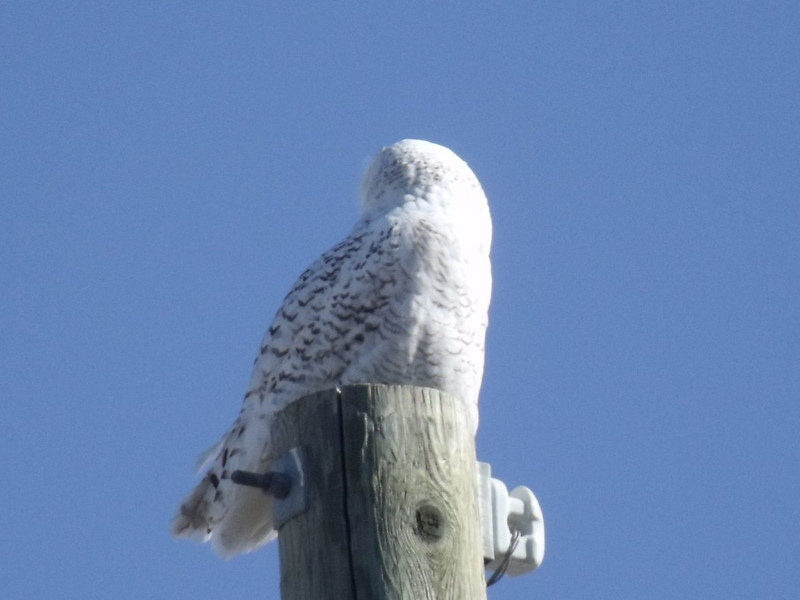
Much of this trip, it was like we were the only people left after the apocalypse. Mile after mile of snow-covered fields, no traffic and more importantly, no birds. We did manage to see 3 snowy owls, but they were few and far between. Not only were they hard to find, they were distinctly uncooperative on the picture front. Too far away for my camera, flying as soon as we stopped, whipping their heads back and forth so I ended up with fuzzy pictures…

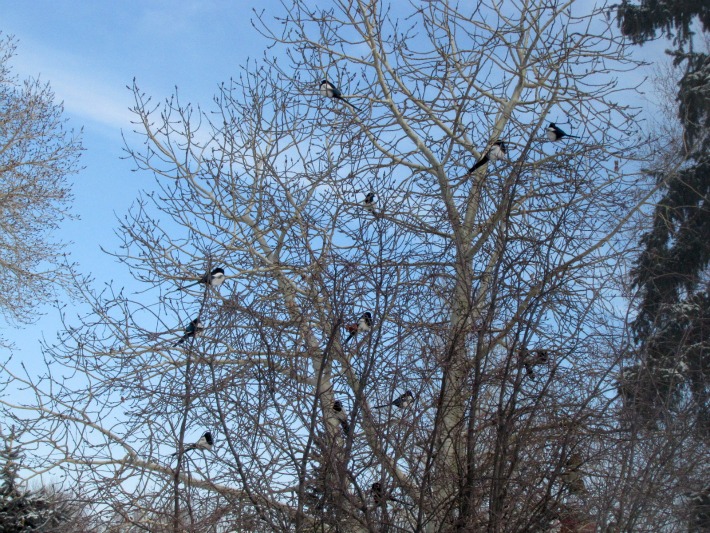
We also saw a couple of golden eagles and a prairie falcon, who all flew the instant we slowed down and I picked up my camera.  Black-billed magpies and ravens were very numerous, and we spotted a flock of bohemian waxwings way out there in the prairie, which was a surprise. Snow buntings were everywhere, but I didn’t even attempt to get a picture of these hyperactive little birds.

The lone coyote we saw in our day-long drive took off at a fast lope as soon as he saw us. You couldn’t blame the poor canid – he probably associates any slow-moving vehicle with a gunshot. Small herds of mule deer were scattered all over the place, although we did see one big group of nearly 40 animals.

As any birder knows, some days the birding gods are with you, and some days they’re not. Or maybe we’ve just been spoiled with our past prairie drives.

Still, I figure even a fuzzy snowy owl picture is better than none!

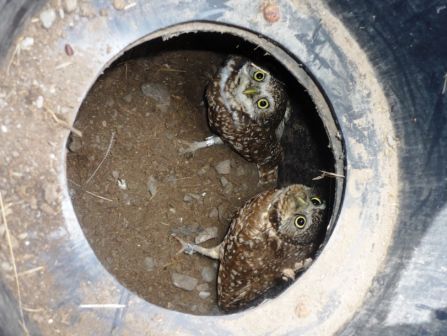
Burrowing Owls Need Your Help

Tuesday, January 4th, 2011

At one time, the Burrowing Owl was common in the four western provinces. Now, it is one of the most endangered birds in Canada. The population decline began in the 1980s and accelerated during the 1990s to an average rate of 22% a year. In 1977, more than 2,000 breeding pairs of Burrowing Owls lived in Canada; by 2000, the number had dropped to fewer than 1,000.

A small, struggling population is hanging on in British Columbia, and they winter in California and Washington.

Read more about these appealing little owls, and sign the petition to help protect their California wintering habitats.

Wooo’s In The Yard

Monday, December 13th, 2010

I think the reason I like owls so much is their complete disdain for the human race. They pretty much don’t care if we exist or not. I’ve seen a lot of owls, but not one of them has ever given the impression of being even slightly interested in our activities. Like any other natural wonder in the world, they make you humble and pretty much put you in your place.

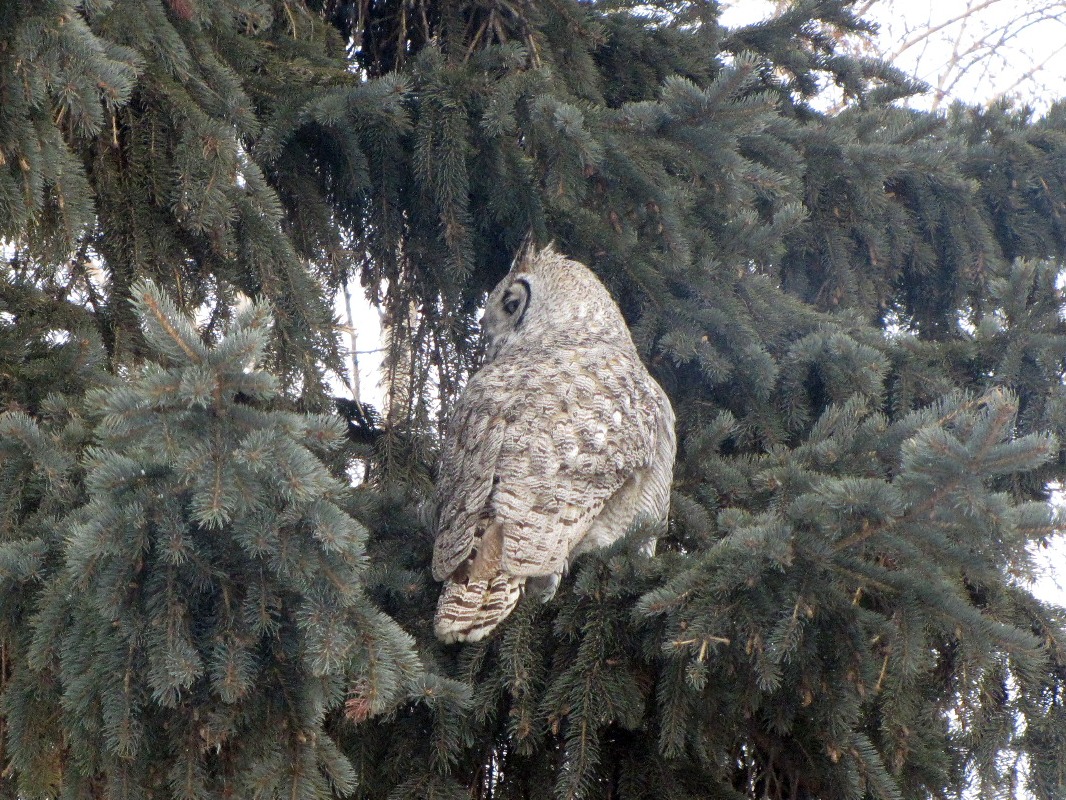
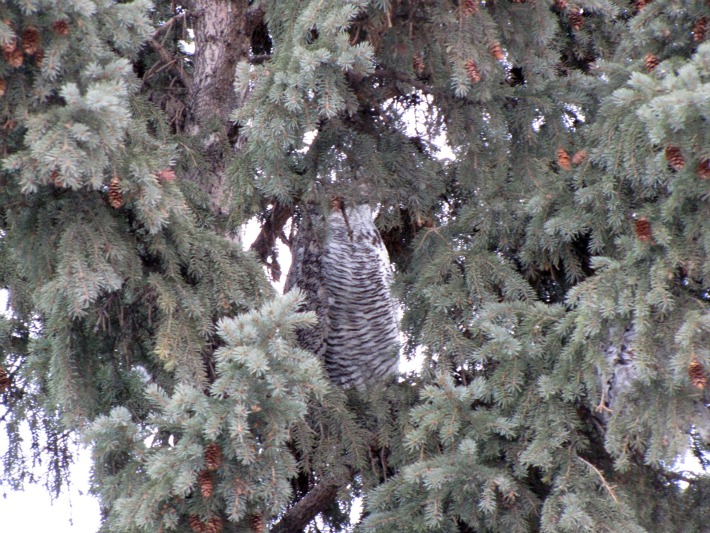
When I noticed this big girl (gender is assumed on my part – she was huge) she was sleeping in my spruce tree.

As I got closer, she deigned to open her big yellow eyes and check me out.

Aaaand then one eyelid started to close again…

She was back in the land of nod and I was summarily dismissed.

Resisting the urge to bow and back away, I took way too many pictures of a sleeping great-horned owl and humbly went back into the house.

Corvid Alarm Notice

Tuesday, October 13th, 2009

It’s a miserable, dark, snowy day here in Calgary. I was enjoying my book and a cup of tea when my corvid alarm went off.

As any birdwatcher knows, a flock of screaming crows, magpies and jays generally means there’s an owl in the vicinity. I grabbed my binoculars & camera, and braved the frigging cold weather to check out the high reaches of my popular tree. And this is who I found.

Great-horned owl

Great-horned owl

I always love the look on an owl’s face when they’re looking down at you. Or down on you, I should say. I can see a whole host of thought bubbles above his head, and none of them are fit for print!

His mob consisted of three crows and two black-billed magpies. It’s amazing how much noise five birds can make. They woke up both the cat and the dog inside the house, who were wandering around looking bewildered.

Corvid mob

Corvid mob - owl on the left

This is a fairly regular occurrence in our yard, and we have corvid alarms go off several times a year. You’ll note this owl is surrounded by green leaves – said green leaves are frozen solid as temperatures have been hovering around -15C for a few days.

The mob eventually won the day, and the owl flew off to look for a quieter resting place. Dog and cat have gone back to sleep, and I’ll resume my tea and book, waiting for the next handy corvid alarm call.

Pellet Puzzle: What’s On Owl’s Menu?

Monday, September 28th, 2009

I love it when owls throw up on me.

One winter day when I was walking my dogs in a thickly wooded area, I sat down for a rest on a fallen log. As the dogs sniffed their way around the area, something fell from the sky and dropped into the snow at my feet. I looked up, and discovered I had chosen a seat right underneath a great-horned owl, who had just gifted me with a fresh owl pellet. I carefully dug that pellet out of the snow and carried it home like it was worth a king’s ransom.

A camping weekend at a prairie reservoir produced another owl gift. Sitting around an evening campfire, something hit the ground in front of me. I looked up into the spruce tree to spy a tiny saw-whet owl sitting there, looking down at me.

So why do I like it when owls give me pellets?

Owls, like other birds-of-prey, eat their food whole. They use their beaks to rip their prey apart and then swallow large chunks. The digestion process separates the softer materials (such as meat) from the harder material (such as bones). These indigestible bits are then regurgitated in the form of a small, sausage-shaped pellet.

Great-horned owl pellet

Great-horned owl pellet

Pellets contain things like the bones of birds, mammals and fish, teeth, claws and beaks, insect head parts and wing cases, seed husks etc. These are usually enclosed by softer material like fur, feathers and vegetable fiber.

Careful dissection of owl pellets will tell you what that owl has eaten.  It’s like a mini-archaeology dig spread out on a table – a puzzle to be solved.  Has this owl been eating the cute little chipmunks around the cabin? Or has he been dining on something larger? Over the years I have found numerous feathers, bones and even cat claws in owl pellets. (yes, large owls will take a domestic cat – another good reason to keep your felines indoors).

In spite of the fact that great-horned owls are very common in our province (they are our provincial bird), anyone that knows of a nesting sight generally tends to guard the information like it’s a vital military secret.  Hoops must be jumped through before the information is shared.

Apparently having passed the trustworthy test, a friend with a river-side cottage showed me his carefully gathered great-horned owl pellets last month. Multiple owl pellets!! I was in heaven, envisioning untold quiet hours of pellet dissection. He quickly brought me down to earth by saying he used them to teach children about owls. Oh. But he did allow me to have one.

I should point out that the rodent body parts in owl pellets may contain viruses and bacteria, so it’s advisable to sterilize the pellet in a microwave before dissecting.  Having done that, I happily buckled down to dissecting my (one) precious owl pellet. Here are the results:

owl pellet bones

I am not a biologist, so although I thought these were the jaw & spinal bones of a small rodent, I couldn’t tell what the animal was.  Then I had a brainwave.

I took a picture of the bones discovered in the pellet and posted it on my twitter account. Within minutes I had four replies telling me they looked like ground squirrel parts. As Richardson’s ground squirrels are very prevalent in the area, this made a lot of sense. This identification was later confirmed by a biologist who examined the actual bones.

There are numerous places online where you can buy sterilized owl pellets which come with complete instructions. Taking the time to dissect them with your children is a great way to teach them about  the balance of nature. Plus, the fact that the owl threw it up (eeuws all around) gets their attention in a big way.

So this winter, when the temperatures drop and the ground is covered with snow, gather the kids around the table and poke through a few pellets. It’s something they will always remember. And if you have extra pellets, feel free to give me a call.

Burrowing Owl Champions

Friday, July 31st, 2009

Situated in the rolling prairie fields of southern Saskatchewan lies an unusual tourist attraction, highlighting a most engaging little bird.

The Saskatchewan Burrowing Owl Interpretive Centre (SBOIC) is an educational facility dedicated to the conservation of burrowing owls and their prairie home. Opened to the public in 1997, the Centre promotes conservation through education, eco-tourism and land stewardship.

In the summer months, the focus is on in-house tours of the facility, and summer day camps for children. Emphasis is on learning about the prairie ecosystem, and the conservation of species and habitat.

A visit to the Centre includes:

  • a walk through a giant burrow;
  • the opportunity to view SBOIC’s captive owls in their outdor enclosure;
  • the chance to see wild hawks, coyotes, jackrabbits, gophers, and other prairie wildlife in the adjacent field;
  • the opportunity to learn more about native prairie plants

The burrowing owl population has been declining steadily for the past few years, and is listed on the Canadian Endangered Species list. Loss of nesting habitat to agriculture and poisoning of their insect prey – human caused threats – have diminished populations throughout both their summer and winter ranges.

Concerned conservationists like those at SBOIC are giving these little owls a fighting chance. The Centre should be on your summer visiting list, and don’t forget to adopt an owl while you’re there!

Saskatchewan Burrowing Owl Interpretive Centre

Located at:

250 Thatcher Drive East
Moose Jaw, SK  S6J 1L7 Canada
E-mail:      sboic@sasktel.net

Barn Owl Burbs

Wednesday, April 22nd, 2009

Do you have barn owls on your life list? Me neither.

Worldwide, they have a very wide distribution. They are found in the Americas, in most of Europe, in non-Saharan Africa, India, South East Asia and Australia

Barn Owl

Barn Owl

These light coloured owls with their heart shaped facial disk are not easy to find in Canada. There are small numbers of them in southern Ontario and Quebec, but their main population is in southern British Columbia. There  have been a few sightings in other provinces, but no nesting sites reported.

The population in BC is estimated at approximately 1,000 individuals, and classed as an animal Of Special Concern. The very small populations In Ontario and Quebec, are classed as Endangered.

The BC barn owls may be getting a hand from orchard owners in Oregon. There is a growing movement there to put up as many barn owl nest boxes as possible to reduce the rodent populations. One family of hungry barn owls can consume more than 3,000 rodents in a nesting season, a fact that has not escaped their notice.

“Voles and gophers cost us more money than you can possibly imagine,” said orchardist Mike Omeg. They eat the roots of young fruit trees or damage the roots of older trees so they don’t bear as well. The cost to farm production can tally in the thousands of dollars a year.”

“The number one limiting factor for barn owls is nesting sites,” said Omeg, who has installed 35 owl boxes and two kestrel boxes on his 350 acres.

As with other wildlife species, urbanization decreased their populations due to the lack of nesting sites, and the resulting drop in prey species. Unlike other animals though, barn owls respond well to a helping hand from the human usurpers of their territory. They are particularly fond of nest boxes provided by land owners, and sometimes prefer them to other sites.

Increases in barn owl populations were noted in Britain after nest boxes were put up. The main characteristics required for a barn own next box are: they have to be dark, with a small opening,  at the same height as natural sites in the area, in an undisturbed area and with the entrance facing an open area to allow for takeoff. They have to be maintained and cleaned regularly. You can get more information on building barn owl nest boxes here.

If you live in a rural area of southern BC, Ontario or Quebec, give a thought to putting up a barn owl nest box. Not only will the owls thank you, but you’ll be thanking the owls when your mice and rats disappear!

Check the Ontario Barn Owl Recovery Project website for more details or listen to the Barn Owl’s call at the Cornell Lab of Ornithology’s All About Birds website.

68 Owl Day

Tuesday, March 31st, 2009

To many birdwatchers, owls are the ultimate challenge. Absolute masters at blending into their environment, combined with the fact that many species are nocturnal, owl sightings are always a treat.

Two experienced birdwatchers in northern Alberta may have just set a record for that treat.

Leaving Edmonton at 7:00 am, they headed through the boreal forest towards Slave Lake. At the end of the day, they had seen an incredible 46 northern hawk owls and 22 great greys.

Birders around the country can only dream of such a day.

It's Spring!

Tuesday, March 3rd, 2009

It’s March in Canada. The Great-horned owls are nesting, the ravens are doing their courtship flights, and today I had the first robin of the year in my yard. What better day to start a Canada birdwatching blog?

There is actually very little information on the net about birdwatching in Canada. I want to rectify that. It is my hope that this blog will become an interactive voice for birds and birders in Canada.

The following item was posted to Alberta Bird a few weeks ago:

A Northern Hawk Owl was watched as it spent about 5 minutes repeatedly attacking fir cones at the top of its tree. When a cone failed to dislodge after a pecking from the bill, the bird would fly out then swoop down and grab the cone with its talons, and drop it off beyond the tree. After the last visible cone in the uppermost 10 feet of the tree had been felled, it settled in to its perch and began preening.

This item really livened up the list, with birders from all over trying to figure out this strange behaviour. Leave us a comment if you want to join the guessers!